

Keynotes
Bio
Nei Kato is a Distinguished Professor with Graduate School of Information Sciences, Tohoku University, Japan. He served as the Dean of the Graduate School from 2021 to 2025. His research areas include computer networking, wireless mobile communications, satellite communications, ad hoc & sensor & mesh networks, UAV networks, AI, IoT, and Big Data. He is the Vice President for publication, IEEE Communications Society. He served as the Editor-in-Chief of IEEE Internet of Things Journal, IEEE Network, IEEE Transactions on Vehicular Technology, and the Vice President for Member and Global Activities, IEEE Communications Society. He is a Clarivate Analytics Highly Cited Researcher, a Fellow of the Engineering Academy of Japan, a Fellow of IEEE, and a Fellow of IEICE.
Ten Challenges in Advancing Machine Learning Technologies towards 6G
As the 5G standard is being completed, the academia and industry have begun to consider more developed cellular communication technique, 6G, which is expected to achieve high data rate up to 1Tb/s and broad frequency bands of 100GHz to 3THz. Besides the significant upgrade of the key communication metrics, Artificial Intelligence (AI) has been envisioned by many researchers as the most important feature of 6G, since the state-of-the-art machine learning technique has been adopted as the top solution in many extremely complex scenarios. Network intelligentization will be the new trend to address the challenges of exponentially increasing number of connected heterogeneous devices. However, compared with the application of machine learning in other fields, such as computer games, current research on intelligent networking still has a long way to go for realizing the automatically-configured cellular communication systems. Various problems in terms of communication system, machine learning architectures, and computation efficiency should be addressed for the full use of this technique in 6G. In this talk, I will introduce ten most critical challenges in advancing the intelligent 6G system. These challenges are analyzed from the perspectives of 6G service requirements, AI algorithm design, practical deployment, and future standardization.

Bio
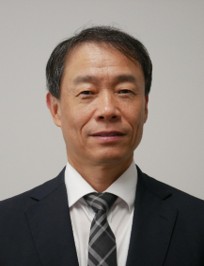
Shiwen Mao is a Professor and Earle C. Williams Eminent Scholar Chair, and Director of the Wireless Engineering Research and Education Center (WEREC) at Auburn University. Dr. Mao’s research interest includes wireless networks, multimedia communications, smart health, smart grid, and machine learning. His work has been recognized by many research and service awards from the IEEE. He is a Distinguished Lecturer of IEEE ComSoc, the Editor-in-Chief of IEEE Transactions on Cognitive Communications and Networking, and an Associate Editor-in-Chief of IEEE Internet of Things Journal. He is a member-at-large of ComSoc Board of Governors (BOG) (2025-2027), ComSoc Director of Magazines (2026-2027), ComSoc Technical Committee Board Director (2022-2025), and the Vice President of Technical Activities of IEEE Council of RFID (2024-2027). He was the General Chair of IEEE INFOCOM 2022, a TPC Chair of IEEE INFOCOM 2018, and a TPC Vice-Chair of IEEE GLOBECOM 2022. He has served as the General Chair, TPC Chair, or Symposium/Track Chair of numerous IEEE/ComSoc conferences, including INFOCOM, ICC, and Globecom. He is a Fellow of IEEE.
Functional Data Analysis for Wireless and Network Intelligence
Cloud computing underpins modern data infrastructure and continuously generates high frequency telemetry from IoT sensors, serverless functions, and virtualized resource logs. Similar time varying data streams arise across intelligent transportation systems, wireless sensing platforms, and connected device ecosystems. Such observations are inherently functional in nature, better modeled as smooth trajectories evolving over continuous domains rather than as isolated tabular records. Yet most analytics pipelines remain rooted in discrete machine learning models that overlook temporal continuity, cross trajectory dependence, and latent functional structure. Functional Data Analysis (FDA) provides a principled statistical framework for modeling data at the function level through smoothing, basis representations, and covariance driven dimensionality reduction. Despite its strong theoretical foundations, FDA remains underutilized in large scale computing and sensing systems due to gaps between statistical methodology and engineering deployment. This talk highlights FDA as a unifying modeling paradigm for time varying data, presenting recent work in traffic flow modeling, RF sensing, RFID signal analysis, and device fingerprinting. Across these domains, functional representations demonstrate improved robustness to noise and missing data, enhanced interpretability of temporal dynamics, and stronger cross domain generalization, positioning FDA as a scalable foundation for modern cyber physical analytics.
Bio
Jun Li, IEEE Fellow, received the Ph.D. degree in Electrical and Computer Engineering from Instituto Superior Técnico, Technical University of Lisbon, Portugal, in 2011. She is currently a Full Professor of Computer Science, China University of Geosciences (Wuhan). She has authored or co-authored more than 200 publications. Her google citation record is as follows: 21000 citations, h-index: 73 (as of July 2026). Her main research interests comprise remotely sensed hyperspectral image processing, signal processing, supervised/semi-supervised learning, fusion, and active learning. She served as the Editor-in-Chief of the IEEE Journal of Selected Topics in Applied Earth Observations and Remote Sensing (J-STARS) in 2021-2025. She is currently serving as the Chair of the Fellow Evaluation Committee of the IEEE Geoscience and Remote Sensing Society.
GeoAI-Driven Heterogeneous Data Fusion for Urban Flood Monitoring
Urban flooding poses a critical threat to cities, demanding monitoring solutions that are both accurate and dynamic. This talk presents a GeoAI-driven framework that fuses remote sensing and citizen science data to transform urban flood monitoring. While the integration of satellite imagery and crowdsourced data offers unprecedented opportunities, it is fraught with critical challenges: discrepancies in data distribution, geolocation uncertainty, the confounding complexity of urban landscapes, and the loss of temporal information critical for risk assessment. To address these issues, we introduce three key innovations. First, a Land Cover Information-Constrained Optimal Transport (LCIOT) model aligns heterogeneous data with high precision by embedding land cover-specific constraints. Second, a fine-grained flood detection method integrates multi-temporal SAR and OpenStreetMap data with CNNs to resolve ambiguities in complex urban settings. Third, a morphology-based spatiotemporal enhancement reconstructs continuous flood evolution, generating 2-day interval risk maps without relying on prior information. Through case studies of the 2017 Houston flood and the 2016 Wuhan flood, I will demonstrate how this integrated framework enables precise heterogeneous data alignment, robust flood detection, and time-series risk assessment. The results underscore the potential of GeoAI to not only advance scientific understanding but also to deliver actionable intelligence for urban emergency response and disaster risk reduction.

Bio
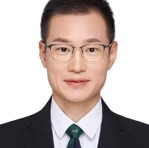
Guan Gui (Fellow, IEEE) received the Ph.D. degree from the University of Electronic Science and Technology of China, Chengdu, China, in 2012. From 2009 to 2014, he joined Tohoku University as a research assistant as well as a postdoctoral research fellow, respectively. From 2014 to 2015, he was an Assistant Professor at the Akita Prefectural University, Akita, Japan. Since 2015, he has been a professor at Nanjing University of Posts and Telecommunications, Nanjing, China. His recent research interests include intelligence sensing and recognition, intelligent signal processing, and physical layer security. Dr. Gui has published more than 200 IEEE Journal/Conference papers and won several best paper awards, e.g., ICC 2017, ICC 2014 and VTC 2014-Spring. He received the IEEE Communications Society Heinrich Hertz Award in 2021, the Clarivate Analytics Highly Cited Researcher in Cross-Field in 2021-2023, the Member and Global Activities Contributions Award in 2018, the Top Editor Award of IEEE Transactions on Vehicular Technology in 2019. Since 2022, he has been a Distinguished Lecturer of the IEEE Vehicular Technology Society. He is serving or served on the editorial boards of several journals, such as IEEE Transactions on Vehicular Technology, and IEICE Transactions on Communications. In addition, he served as the IEEE VTS Ad Hoc Committee Member in AI Wireless, Executive Chair of IEEE ICCT 2023, Executive Chair of VTC 2021-Fall, and Vice Chair of WCNC 2021.
High-Reliability Communication Unmanned Swarm Agents for Low-Altitude Intelligent Connectivity: Prototype System Design and Verification
Aiming at the bottlenecks of unstable communication links, poor coordination consistency and weak task fault tolerance of unmanned swarms caused by urban airspace occlusion, time-varying electromagnetic interference and Doppler fading from high-speed maneuvering in low-altitude intelligent connectivity scenarios, this paper carries out the design and verification of a high-reliability communication unmanned swarm agent prototype system to meet the demands of large-scale low-altitude unmanned operations. Relying on the integrated communication-sensing-intelligence network infrastructure for low-altitude airspace, a hierarchical cloud-edge-end collaborative architecture for unmanned swarm agents is constructed by combining multi-agent autonomous coordination mechanisms and distributed anti-interference networking technologies. By adopting adaptive dynamic topology networking, intelligent game-based optimization of spectrum resources, self-healing reconstruction of faulty communication links and real-time situation synchronization based on digital twins, the closed-loop coupling of low-altitude environmental perception, reliable transmission, intelligent decision-making and formation control is realized. The proposed scheme effectively addresses critical challenges including link disconnection failure, delay jitter and coordination loss of swarms under complex dynamic low-altitude conditions. Functional verification and performance tests of the prototype system are implemented via simulation platforms and typical low-altitude service scenarios. Experimental results demonstrate that the system possesses prominent advantages such as strong anti-interference capability, high link connectivity, rapid topological reconstruction and stable coordination performance. It can support large-scale swarm missions including low-altitude inspection, airspace security and low-altitude logistics, and provide feasible prototype schemes and technical references for the engineering deployment of low-altitude intelligent connected unmanned systems.
Bio
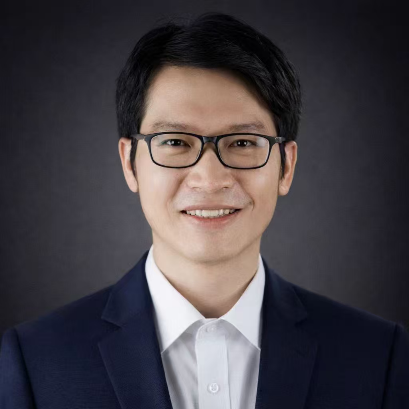
Tianyi Zhou is the Head of the Applied AI Systems & Agents Chapter at A*STAR Institute of Advanced Intelligence and Computing (IAIC) and Deputy Director with A*STAR Centre for Frontier AI Research (CFAR), Singapore, as well as the Head of AI Engineering & Platform at the National Applied AI Centre of Excellence (CoE). Before working at A*STAR, he was a senior research engineer with SONY US Research Center in San Jose, USA. Dr. Zhou received a Ph.D. degree in computer science from Nanyang Technological University (NTU), Singapore. He has published over 150 papers in these areas and received the Best Student Paper Awards and nominations at the European Conference on Computer Vision (ECCV’16), IEEE SmartCity 2022, and ACM Multimedia 2024, respectively. He is listed in the Top 2% Scientists Worldwide (Career List) by Stanford University. Dr. Zhou is serving on the Associate Editor for many leading journals like IJCV, AIJ, IEEE Transactions, etc., and is the Associate Programme Chair in IJCAI 2025, Industry Programme Chair in IJCNN 2025, Programme Chair in IJCNN 2027, and Area Chair in top machine learning conferences like ICLR, ICML, NeurIPS, etc.
From Workflow to Evidence Flow: Rethinking Research Organizations in the AI Era
Foundation-model capabilities are being commoditized at an unprecedented pace. Coding, retrieval, translation, and summarization—once regarded as competitive moats—have rapidly become standard features. As a result, simply knowing how to use AI is no longer a sustainable organizational advantage. The locus of value is shifting elsewhere. Drawing on a real-world deployment within a research organization, this talk addresses three increasingly fundamental questions. Why does AI adoption remain difficult, despite the absence of any truly “plug-and-play” solution? What are the capabilities that organizations should build and own themselves for the long term? And as general intelligence continues to improve, where should we place our strategic bets? The talk walks through a complete deployment journey—from an evidence-based assessment of today’s commercial AI offerings, including collaboration suites, platform AI layers, and engineering intelligence platforms, to the design and implementation of an organizational protocol for research. In this system, project status is derived automatically from real working artifacts rather than manually reported; decisions are managed through a plain-text, version-controlled protocol, with every action cryptographically signed and fully auditable. Building on this experience, the talk argues that general-purpose AI tools are designed to manage workflows, whereas research and professional organizations must instead manage evidence flows—claims, evidence, negative results, reproducibility, and provenance. This distinction repeatedly emerges across five decades of enterprise software evolution, today’s spec-driven development practices, and the case study presented here. The talk concludes with a practical diagnostic framework and a simple strategic principle: Don’t race the model—build its granary.
Bio
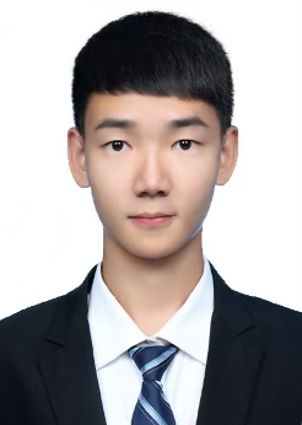
Wanmai Yuan is a Senior Engineer with the Information Science Academy, China Electronics Technology Group Corporation (CETC), Beijing, China. He received the B.Eng. degree in Communication Engineering from Xidian University, Xi’an, China, in June 2014. He earned dual Ph.D. degrees in Electronic and Information Engineering: one from Harbin Institute of Technology in July 2019, and the other from The Hong Kong Polytechnic University in September 2019. From 2018 to 2019, he served as a visiting Ph.D. student with the Department of Electrical and Computer Engineering, University of Toronto. His primary research interests focus on flocking control and formation control for unmanned aerial vehicles and large-scale intelligent UAV swarm systems. He was awarded the Young Elite Scientist Sponsorship Program by the China Association for Science and Technology (CAST) in 2021, and honored as a National Young Talent in 2023. His research outputs cover national major swarm demonstration projects, large fixed-wing UAV cluster flight verifications, and industrialized vehicle-mounted bee swarm equipment, supporting the innovative development of China’s low-altitude economy.
Boosting Low-Altitude Economy Competitiveness via Intelligent Unmanned Swarm Innovation
Low-altitude economy has been designated a national strategic emerging industry in China, supported by a complete top-down policy system. Driven by new productive forces, the low-altitude industrial ecosystem covers four core segments: production operations, transportation, cultural & sports services, and public security, all underpinned by a full-stack technical framework including aircraft design, communication navigation, airspace management and swarm intelligence. Intelligent unmanned swarm technology stands as the transformative core of this emerging sector, evolving from single automated UAVs to fully autonomous cluster systems featuring distributed perception, collaborative decision-making and decentralized control. Such swarm systems deliver exponential efficiency gains, unlock complex mission capabilities unreachable by individual aircraft, and spawn service-oriented industrial business models. This talk systematically elaborates China’s technological progress in UAV swarms, conducts a comparative analysis of Sino-US development paths, industrial layouts, R&D investment and representative swarm projects. We demonstrate real-world swarm deployments across logistics delivery, precision agriculture, forest fire suppression and mountain emergency rescue with domestic field cases. Current limitations of Swarm 1.0 architectures relying on satellite navigation and centralized communication are summarized, and we outline the roadmap toward next-generation Swarm 2.0 with communication-free coordination, satellite-independent positioning and large-scale full autonomy. Finally, we discuss cross-cutting challenges including supply chain resilience, technology ethics and global industrial governance, highlighting that breakthroughs in intelligent swarm algorithms and engineering integration will secure technological dominance and standard-setting power in the global low-altitude economy competition.
